

 WordPress
 Elementor
 WooCommerce
 ACF
 Rank Math
 Yoast SEO
 WPForms
 LiteSpeed Cache
 Cloudflare
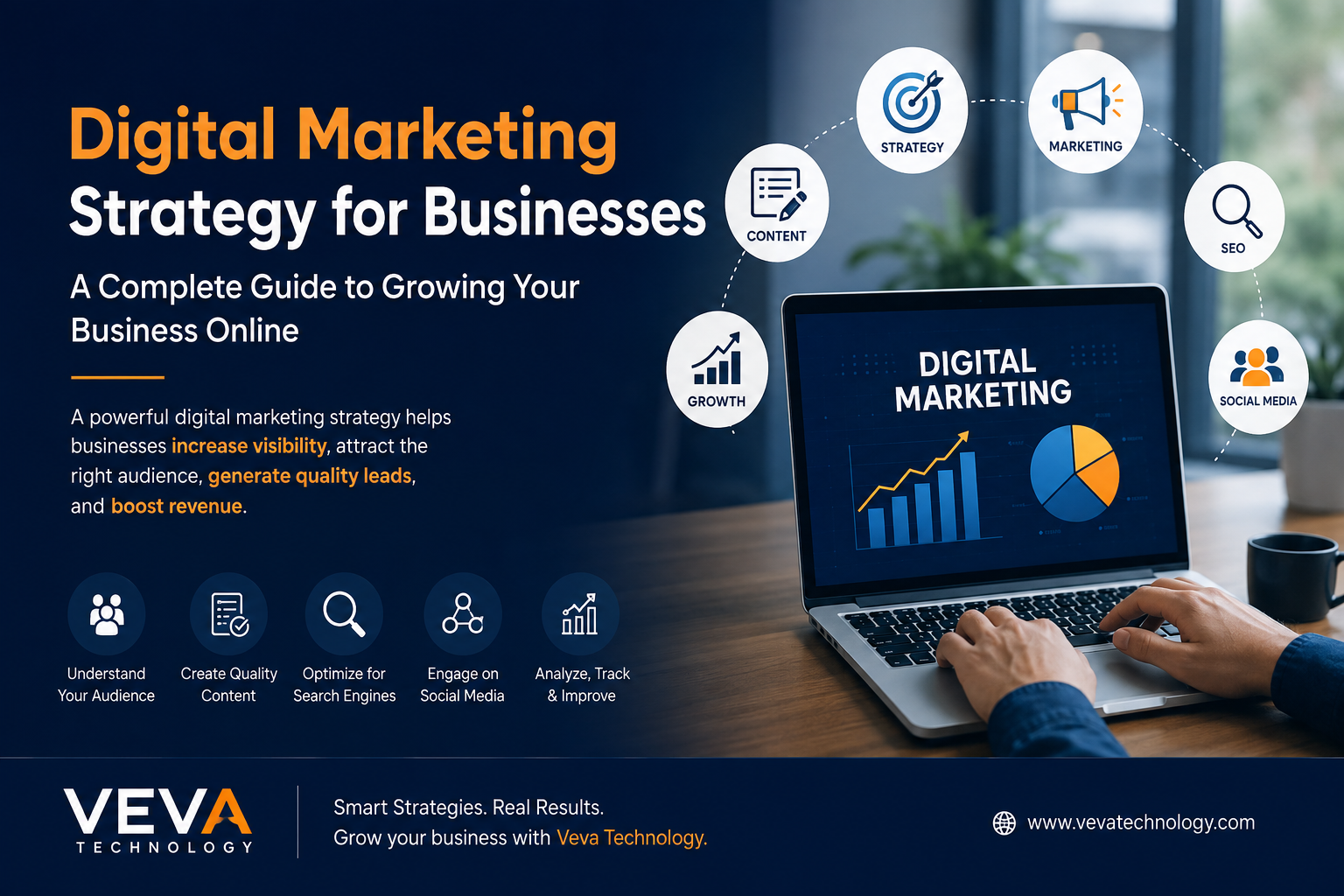
Digital Marketing Strategy for Businesses: A Complete Guide to Growing Your Business Online
Digital Marketing Strategy for Businesses: A Complete Guide to Growing Your Business Online
In today's competitive digital world, having an online presence is no longer optional for businesses. Customers use search engines, social media, websites, online reviews, and digital platforms to discover products and services before making purchasing decisions.
A well-planned digital marketing strategy for businesses helps you reach the right audience, build brand awareness, generate quality leads, and increase sales. Instead of relying on a single marketing channel, businesses can combine SEO, content marketing, social media, paid advertising, email marketing, and analytics to create a strong and measurable online presence.
In this guide, we will explore the key elements of an effective digital marketing strategy and how businesses can use them to achieve sustainable online growth.
What Is a Digital Marketing Strategy?
A digital marketing strategy is a planned approach to promoting your business through online channels. It involves understanding your target audience, setting measurable goals, selecting the right marketing channels, creating valuable content, and continuously analyzing performance.
A successful strategy may include:
- Search Engine Optimization (SEO)
- Content Marketing
- Social Media Marketing
- Google Ads and PPC Advertising
- Email Marketing
- Local SEO
- Website Optimization
- Conversion Rate Optimization
- Analytics and Performance Tracking
The right combination depends on your industry, target audience, business goals, competition, and available budget.
Why Is Digital Marketing Important for Businesses?
Digital marketing allows businesses to connect with potential customers where they spend a significant amount of their time — online.
1. Increase Online Visibility
SEO, social media, content marketing, and paid advertising can help your business appear in front of potential customers when they are searching for relevant products or services.
2. Reach the Right Audience
Digital marketing provides multiple ways to target audiences based on location, interests, search behavior, demographics, and other relevant factors.
3. Generate Quality Leads
A combination of optimized landing pages, valuable content, SEO, and targeted advertising can attract users who are genuinely interested in your products or services.
4. Build Brand Awareness
Consistent content and social media activity help businesses establish a recognizable brand and maintain regular communication with their audience.
5. Measure Marketing Performance
Unlike many traditional marketing methods, digital marketing provides measurable data such as website traffic, clicks, leads, conversions, engagement, and advertising performance.
Key Elements of a Successful Digital Marketing Strategy
1. Understand Your Target Audience
Before starting any digital marketing campaign, you need to understand who your ideal customers are.
Research their:
- Age and location
- Interests and preferences
- Problems and requirements
- Online behavior
- Search queries
- Buying decisions
- Preferred communication channels
Understanding your audience helps you create marketing campaigns and content that are more relevant and useful.
2. Build a Professional Business Website
Your website is often the first major interaction customers have with your business.
A good business website should be:
- Mobile-friendly
- Fast-loading
- Easy to navigate
- Secure
- Search-engine friendly
- Clear about your products or services
- Designed with strong calls to action
Your website should make it easy for visitors to understand what you offer and take the next step, whether that means contacting you, requesting a quote, making a purchase, or booking a consultation.
3. Invest in Search Engine Optimization
SEO is one of the most important components of a long-term digital marketing strategy.
SEO helps improve your website's visibility in search engine results and allows potential customers to discover your business organically.
An effective SEO strategy can include:
- Keyword research
- On-page SEO
- Technical SEO
- Content optimization
- Local SEO
- Internal linking
- Link building
- Website performance optimization
- SEO monitoring and reporting
Businesses should focus on creating useful content that answers customer questions instead of simply adding keywords to pages.
4. Create Valuable Content
Content marketing helps businesses educate their audience, answer common questions, demonstrate expertise, and build trust.
You can create:
- Blog posts
- Guides
- Case studies
- Videos
- Infographics
- Social media posts
- FAQs
- Industry insights
- Product guides
For example, a web development company can publish articles about website security, website design trends, SEO, e-commerce development, and website performance.
Consistent and useful content can support both SEO and customer engagement.
5. Use Social Media Marketing
Social media provides businesses with an opportunity to communicate directly with their audience and strengthen their brand presence.
Depending on your target audience, you can use platforms such as:
- YouTube
- Other relevant social platforms
A good social media strategy should focus on useful content, audience engagement, brand storytelling, promotional campaigns, and consistent communication.
6. Use Google Ads and Paid Advertising
SEO can take time to generate results, while paid advertising can help businesses reach potential customers more quickly.
Google Ads can be used for:
- Search campaigns
- Display advertising
- Shopping campaigns
- Remarketing
- YouTube advertising
Successful PPC campaigns require proper keyword research, audience targeting, compelling ad copy, conversion tracking, and continuous optimization.
7. Focus on Local SEO
For businesses serving a specific city or geographic area, local SEO can be extremely valuable.
Local SEO can help businesses improve visibility for location-based searches such as:
"web development company near me"
"SEO company in Indore"
"digital marketing agency in Dubai"
Important local SEO activities include:
- Google Business Profile optimization
- Local keyword targeting
- Business directory listings
- Customer reviews
- Location-specific website pages
- Consistent business information
8. Optimize Landing Pages for Conversions
Getting website traffic is only part of digital marketing. You also need to convert visitors into leads or customers.
Effective landing pages should have:
- Clear headlines
- Relevant content
- Strong calls to action
- Trust signals
- Easy-to-use contact forms
- Mobile-friendly design
- Fast loading speed
Instead of sending every advertising visitor to your homepage, consider creating dedicated landing pages based on specific campaigns and services.
9. Use Email Marketing
Email marketing can help businesses stay connected with existing customers and potential leads.
Businesses can use email campaigns for:
- Newsletters
- Product updates
- Special offers
- Educational content
- Lead nurturing
- Customer follow-ups
A well-planned email strategy can help maintain customer relationships and encourage repeat business.
10. Track and Analyze Your Results
A digital marketing strategy should always be measurable.
Monitor important metrics such as:
- Website traffic
- Organic traffic
- Keyword rankings
- Leads
- Conversion rate
- Cost per lead
- Social media engagement
- Ad performance
- Return on advertising spend
Analyzing this data helps identify what is working and where improvements are required.
How to Create a Digital Marketing Strategy for Your Business
A simple process can help you build an effective strategy.
Step 1: Define Your Business Goals
Decide what you want to achieve.
For example:
- Increase website traffic
- Generate more leads
- Increase online sales
- Improve brand awareness
- Expand into new markets
Step 2: Identify Your Ideal Customers
Understand your target audience and their needs, problems, interests, and buying behavior.
Step 3: Analyze Your Competitors
Research your competitors' websites, SEO strategies, content, social media presence, advertising, and online reputation.
Step 4: Select the Right Marketing Channels
You don't necessarily need to use every digital marketing channel. Choose the platforms that are most relevant to your audience and goals.
Step 5: Create a Content Plan
Develop useful and relevant content around the questions and problems your customers are searching for.
Step 6: Launch Your Campaigns
Start your SEO, social media, paid advertising, content marketing, or email campaigns based on your strategy.
Step 7: Measure and Improve
Regularly analyze performance and make changes based on real data.
Common Digital Marketing Mistakes Businesses Should Avoid
Many businesses invest in digital marketing but don't achieve the expected results because of common mistakes.
Ignoring the Target Audience
Marketing without understanding your customers can result in irrelevant campaigns and wasted budgets.
Focusing Only on Traffic
High website traffic doesn't always mean more sales. Businesses should focus on relevant traffic and conversions.
Neglecting Mobile Users
A large portion of online users access websites through mobile devices. Your website should provide a smooth mobile experience.
Not Tracking Conversions
Without proper tracking, it becomes difficult to determine which campaigns are generating actual business results.
Inconsistent Content
Publishing content occasionally without a strategy can make it difficult to build long-term visibility and engagement.
Expecting Instant SEO Results
SEO is generally a long-term process. Consistent optimization, useful content, technical improvements, and authority building are important for sustainable growth.
Final Thoughts
A strong digital marketing strategy for businesses combines multiple online marketing channels to attract, engage, and convert the right audience.
From SEO and content marketing to social media, Google Ads, local SEO, and analytics, every component should work together toward clearly defined business goals.
The most effective strategy is not simply about being present on every platform. It is about understanding your audience, providing value, measuring performance, and continuously improving your approach.
At Veva Technology, we help businesses build and improve their online presence through website development, SEO, social media marketing, Google Ads, and other digital marketing solutions. A well-planned digital strategy can help your business increase visibility, generate quality leads, and create sustainable online growth.